
Divine Sympoiesis
How lichen help us think the relationality of God’s being.

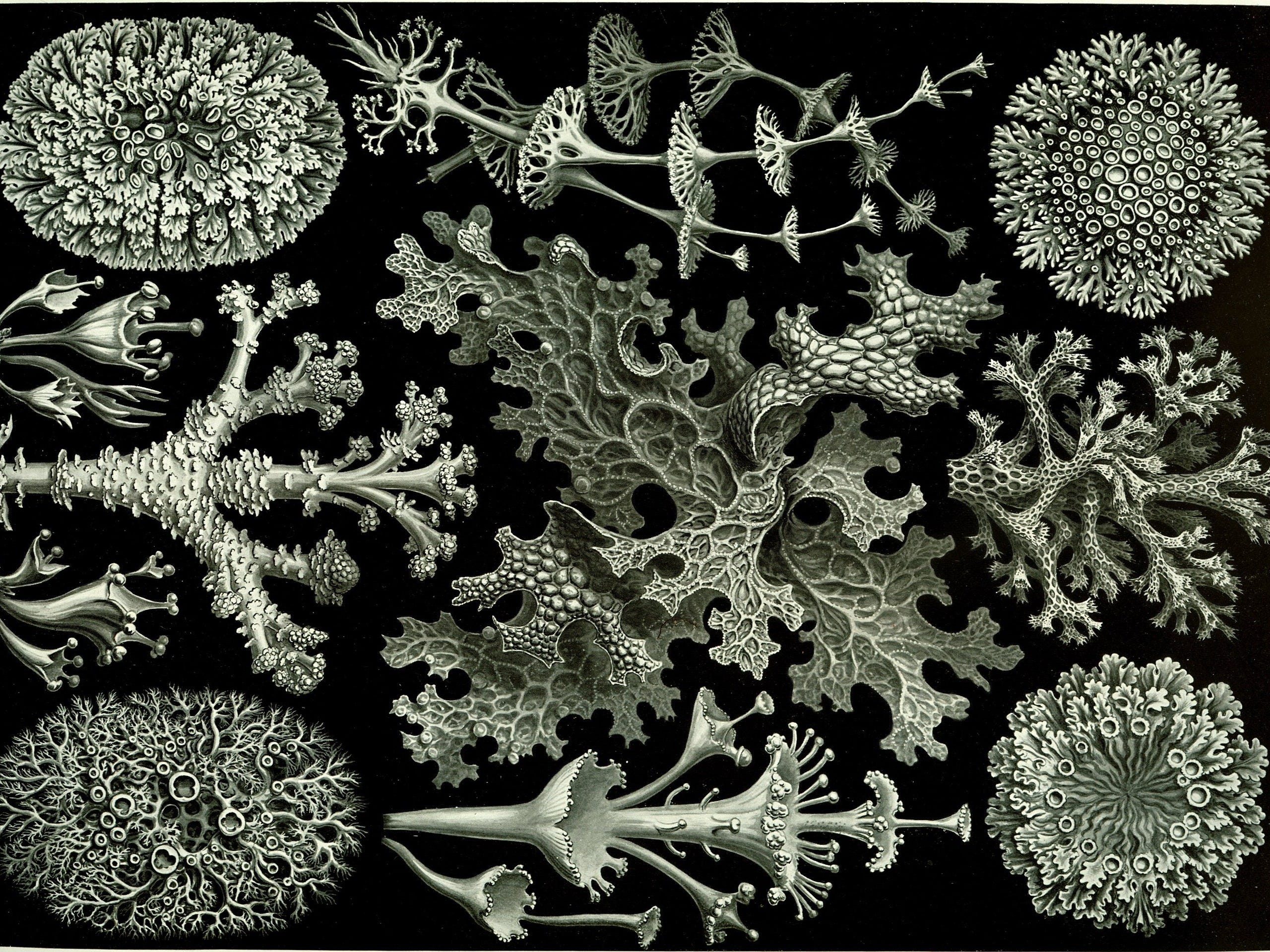
In 1869, the Swiss botanist Simon Schwendener controversially proposed what he called the “dual hypothesis of lichens.” He argued that lichens were not a single organism, as had long been assumed, but were actually composed of two different organisms: a fungus and an alga. This shocked the scientific community. Charles Darwin’s then recent theory of evolution meant that new species were supposed to come into existence by diverging from one another, splitting off to begin new genetic branches. They weren’t supposed to ever converge back together. And yet, as Schwendener argued—and as we have now come to take for granted—lichens are composed of fungi and algae. Two organisms in one body.
Analogies for the Trinity
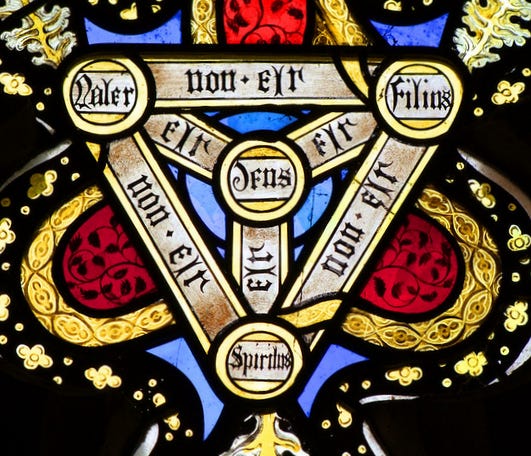
I sometimes joke that it is impossible to talk about the Trinity without accidentally committing some kind of heresy. “One God in three persons” seems easy enough on the surface until you try to actually understand what that means.
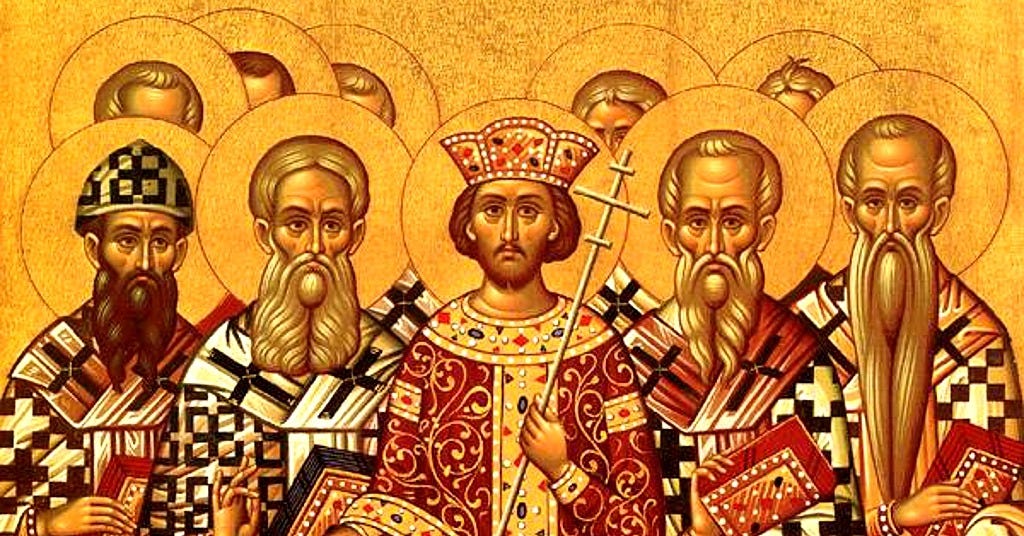
A lot of us have probably heard the popular analogy that the Trinity is like a three-leaf clover often attributed to St. Patrick. But that image is a version of the heresy known as Tritheism—the idea that God is three separate beings, not united in one essence. Tritheism was officially condemned by the Church at the Third Council of Constantinople in the year 680.
Or for another example, there’s the analogy that the Trinity is like water in its three different states—liquid, ice, and vapor. But that’s just a version of the heresy called Modalism—the idea that God is just one person who shows up in different forms at different times. That was condemned as a heresy even earlier, at the Council of Constantinople in 381.
None of these analogies provide a satisfying description of what it means for God to be Triune, and yet people turn to them because they imperfectly try to describe our experience of what God is like.
This is exactly where the doctrine of the Trinity should begin—not with formulations, but with our experience of what God is like. It was by reflecting on scripture and their experience of God in Jesus and the Holy Spirit, that the early church began using the language that we now think of as Trinitarian—Father, Son, and Holy Spirit, one God.
The early church had a long series of councils trying to say what exactly God is. They first tried at the Council of Nicaea in the year 325 to articulate the doctrine of the Trinity but had to meet again in 381 at the Council of Constantinople to work out more of the details. But even these two councils weren’t enough, so for hundreds of more years, the Church kept meeting, trying to clarify what God is, and importantly what it means that God is Triune. When one way of talking about this reality came up against its limits, they needed further clarification or a slightly different way to talk about what God is, and so they kept reconstructing their understanding of what God is.
More about Lichen
After a few decades, lichenologists (a delight word for scientists who study lichen) began adopting Schwendener’s “dual hypothesis” understanding of lichen as composed of both fungi and algae. But they took issue with the imagery that he used to describe that relationship between the two—finding it not quite satisfying to describe the reality. You see, Schwendener had called the fungal partner of lichen a parasite, (to give you the exact quote) a parasite “with the wisdom of statesmen” that had made the algal partner “its slave… which it has sought out… and forced into its service.” Fungus enslaving the alga is quiet the image to use, especially remembering that this was in 1869, just four years after the American Civil War was fought to end the practice of human slavery.
Turning to this problem of how to redescribe the relationship between fungi and algae that made up lichen, the German botanist Albert Frank coined the term “symbiosis.” As Frank used it, in a symbiotic relationship neither partner takes at the expense of the other, but both mutually depend on one another and contribute to the wellbeing of the other. The fungal partner does not take at the expense of its algal partner, as Schwendener thought, but they mutually contribute to an overall wellbeing. Scientists think that lichen formed in harsh conditions in which neither fungi nor algae could have survived on their own. But together, they formed a small ecosystem—a tiny community—in which they could both survive together.
Once we have a word to describe something, we begin seeing reality in new ways through the space opened up by that word. In subsequent years, scientists began finding examples of symbiotic relationships between organisms throughout nature, often explicitly referring back to lichen as the model for symbiotic relationships. Think about clownfish and sea anemones, bees and flowering plants, or mycorrhizal fungi and plants. These relations of mutuality show up throughout nature.
God as Relationality
Some modern theologians articulate a view called Social Trinitarianism. Thinking about God as a Trinity, they say, helps us understand something about the relationships we have with each other. Like having a new word to describe reality, having the concept of the Trinity helps us understand human relationships in new ways.
The doctrine of the Trinity says that God is not a solitary being but a relationship between three persons—Father, Son, and Holy Spirit—living in mutual love, equality, and care for one another. In the same way, none of us can survive on our own as solitary individuals, but we need each other. Like fungi or algae cannot survive in harsh conditions on their own, but needed to come together into a symbiotic relationship, we also need each other and must come together and contribute to each other’s wellbeing.
Endosymbiosis
As scientists started seeing ecological systems more and more through the concept of symbiosis, the American biologist Lynn Margulis developed a new theory in evolutionary biology called endosymbiotic theory. For a long time, scientists were unsure how life evolved from simple single cell organisms (what are called prokaryotes) into more complex organisms, like plants, animals, and fungi, with cells made up of various parts enclosed within a membrane (what are called eukaryotes).
Explicitly referring to the symbiotic relationship making up lichen, Margulis argued that symbiotic relationships could lead to the emergence of new individual organisms. The more complicated cells of eukaryotes developed when single cell organisms engulfed bacteria which then continued to live inside of them. These bacteria eventually became parts of the eukaryotic cells like mitochondria in animals and chloroplasts in plants.
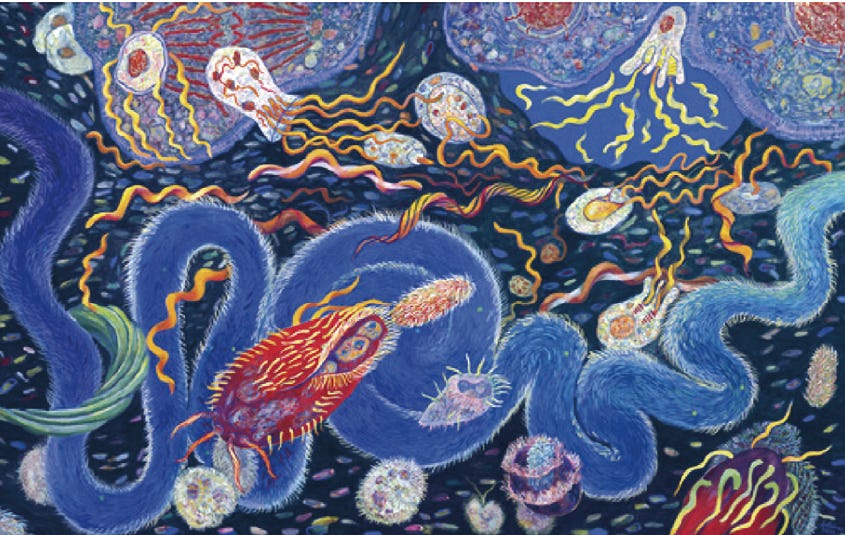
All complex life that followed, including us humans, is the result of these symbiotic partners coming together two billion years ago. This means that almost every cell in your body is the result of endosymbiosis.
Even as individuals, we are not solitary beings. The very cells of our bodies are the result of symbiotic partners coming together to form something greater than the individuals.
Relational Creation
Throughout the history of trinitarian thought, the church has used Proverbs 8 from the Hebrew Bible in various ways. Keeping in mind that this text also belongs to other traditions that do not think of God as a Trinity, it can help us understand the relationality that Christians call the Trinity.
In this passage, God does not create as a solitary being but is accompanied by Wisdom. When God established the heavens, Wisdom was there. When God drew a circle on the face of the deep, Wisdom was working alongside God as a skilled artisan, rejoicing and delighting in what they created together.
The opening of John’s gospel famously extends this idea that Wisdom was with God at creation, saying that all things came into being through this Wisdom, hinting that Jesus is the incarnation of that wisdom. Or to say it a bit differently, out of the relationality that God is in God’s Triune being, God creates more relationships—the relationship that God has to creation, to humans, and even the relationships that we have with each another. God spins more webs of relationality out of the relationality that makes up God’s being.
More about Lichen
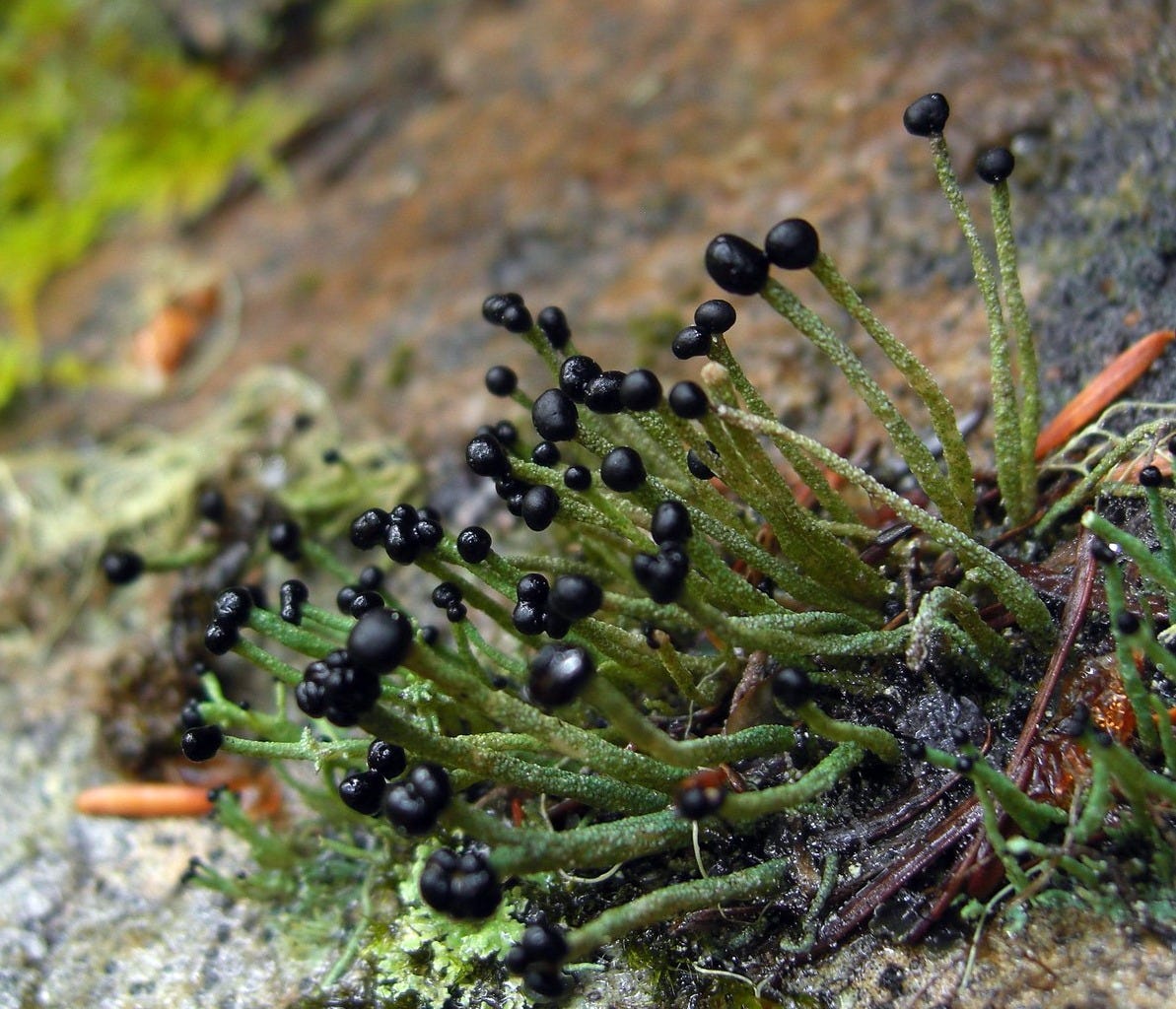
Quite recently, in 2016 another groundbreaking paper on lichen was published that shattered the “dual hypothesis” theory. Almost by accident, a scientist named Toby Scribille, while trying to sequence the DNA of a lichen, kept discovering what he initially thought were additional contaminant organisms. But as he kept working, he soon discovered that the additional organisms he kept detecting were not contaminants at all, but additional symbiotic partners—bacteria and additional smaller fungi.
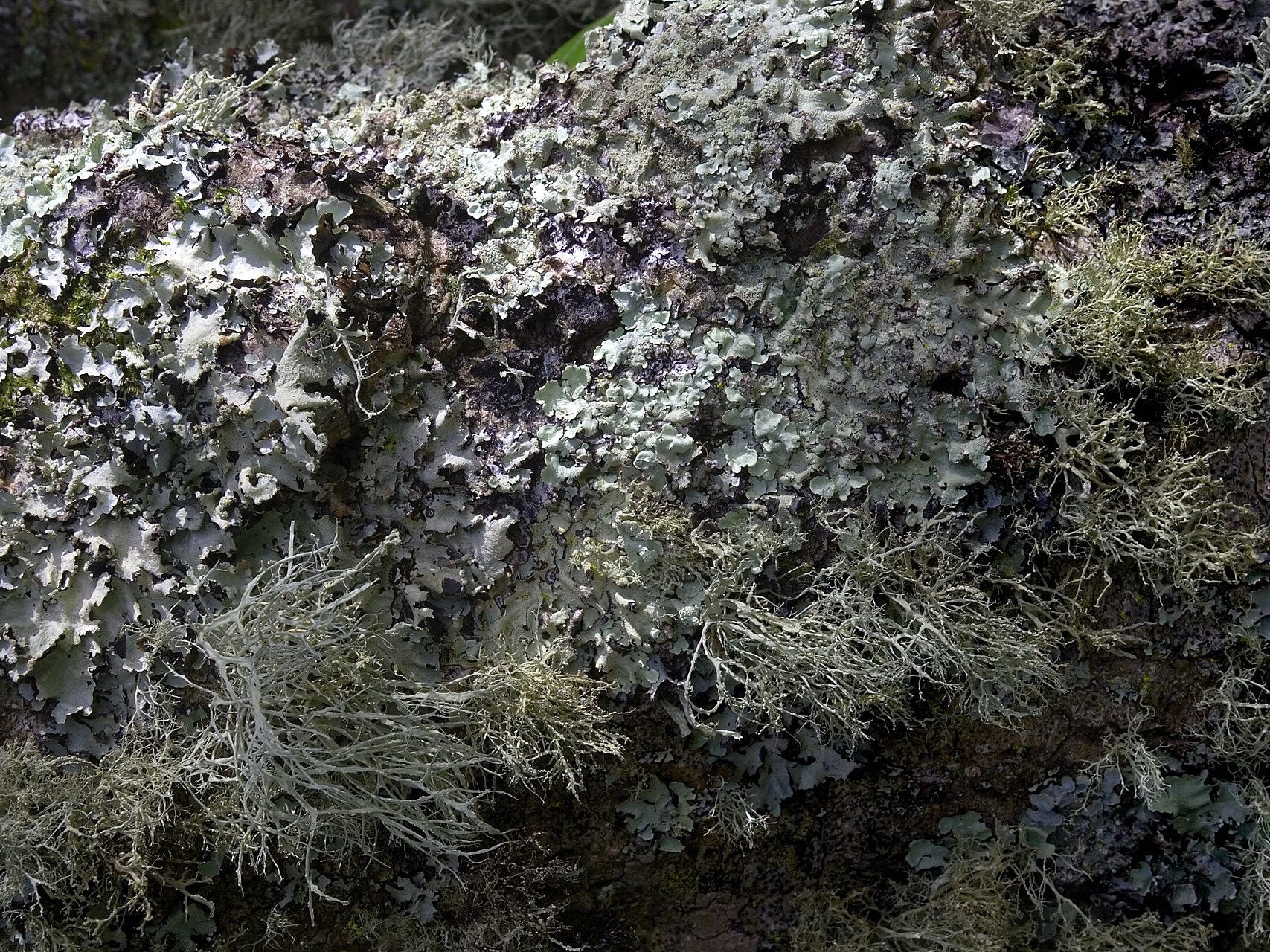
Lichen, as it turns out, are not just a single symbiotic partnership, but they are microbiomes—entire habitats in which dozens of other fungi and bacteria live in addition to the other symbiotic partners. Many of the features that characterize a lichen as that specific kind of lichen do not come from either of the two basic fungi and alga partners, but from the additional bacteria or fungi that live inside that particular lichen. The two original partners created a microbiome that came to also provide a home for dozens of other organisms who joined the symbiotic relationship that makes up the lichen.
Divine Sympoiesis
Building on this sequence of scientific discoveries, Donna Haraway introduced the term sympoiesis, which means “making-with.” The two original symbiotic partners composing lichen created a microbiome together in which additional bacteria and fungi partners also made a home. These symbiotic partners in turn change key aspects of the overall lichen, creating something new again. Out of their relationality, they create together.
I said earlier that it is nearly impossible to talk about the Trintiy without falling into some kind of a heresy, and so I’ve gone and done just that by comparing the Trintiy to a lichen. Of course, this isn’t a perfect analogy—there are no perfect analogies to talk about the Trinity. But thinking about lichen does help us understand two important truths about the Trinity.
First, just like the reality of lichen was not fully articulated by Schwendener’s early “dual hypothesis” theory, nor even the understanding of symbiotic relationships, so too the reality of what God is was not fully articulated by a church council in 325 AD nor in the latest works of systematic theology. Because the doctrine of the Trinity begins with our experience of God, we are still learning what it means that God is Triune. It is perhaps a bit unsettling to think that we have not yet fully grasped who and what God is. But it is also an invitation to continue exploring the depths of this truth.
The early church drew on their best understanding of the world to talk about God, using language like ousia (essence) and hypostasis (person). In the same way, we should continue drawing on our best understanding of the world to continue trying to describe the Trinity.
Second, just as a lichen at the core of its being is a relationship, the most important thing about the Trinity is that at the core, God is a relationality that sympoietically creates ongoing forms of relationships. Just as lichen are not defined by any one of its partners, but are the complex relationship taking place between fungi, algae, and bacteria, so too God is not the Father, Son, or Holy Spirit in isolation, but is what emerges from the relationship between these three persons.
At the core of God’s being, God is relationality. What this means is a truth that the Holy Spirit continues to guide us into knowing—a truth that we continue to explore through our sympoietic relationship with that God who is relationality.
Engage in some sympoiesis by leaving a comment or sharing this with a friend!
Notes:
The story of these scientific discoveries about lichen and my understanding of these ecological terms came from Merlin Sheldrake’s Entangled Life (2020) and Donna Haraway’s Staying with the Trouble (2016).